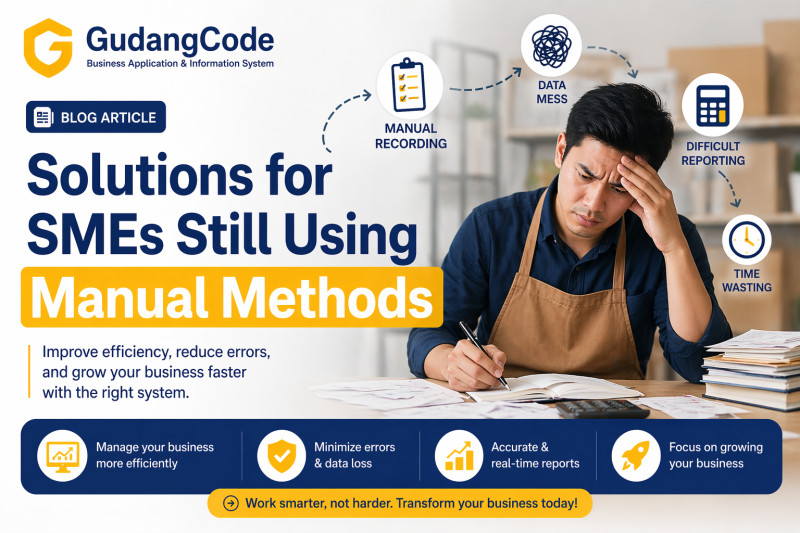
Still Running Your Business Manually? Here’s How to Improve Efficiency with Digital Systems
Many small businesses still rely on manual processes—writing transactions in notebooks, managing inventory without a system, and handling finances in basic spreadsheets.
While this may work in the beginning, it quickly becomes inefficient as the business grows. Errors, missing data, and lack of real-time insights can slow down your progress.
If this sounds familiar, it might be time to start your digital transformation.
1. Use Business Applications
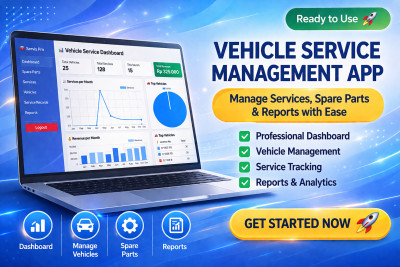
Business apps help automate daily operations and organize your data in one place, making everything easier to manage.
2. Use a POS System
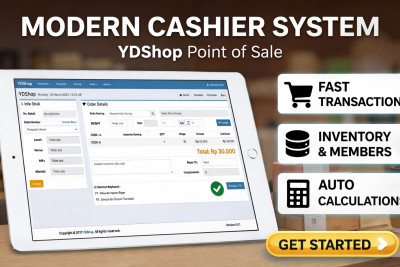
A digital POS system records transactions automatically and reduces calculation errors while speeding up customer service.
3. Implement Inventory Management
Track your stock in real-time without manual counting. This helps prevent stock shortages or overstocking.
4. Use Digital Accounting Tools
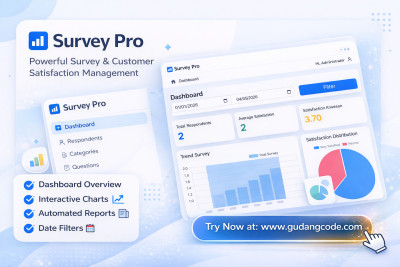
Manage your income and expenses more efficiently. Financial reports can be generated instantly without manual work.
5. Use Cloud-Based Systems
Cloud systems allow you to access your business data anytime and from anywhere, even if you're not at your store.
6. Start Small
You don’t need to change everything at once. Begin with the most critical parts of your business, such as sales or finance.
Problems with Manual Systems
- Inaccurate data
- Slow processes
- High risk of data loss
- Difficult reporting
- Limited business growth
Benefits of Going Digital
- Improved efficiency
- Accurate and organized data
- Real-time reporting
- Easier business monitoring
- Better scalability
Start with the Right Digital Solution
You don’t need to build everything from scratch. There are many ready-to-use business applications available.
Explore digital solutions here:
Conclusion
Manual systems may feel simple, but they can limit your business growth.
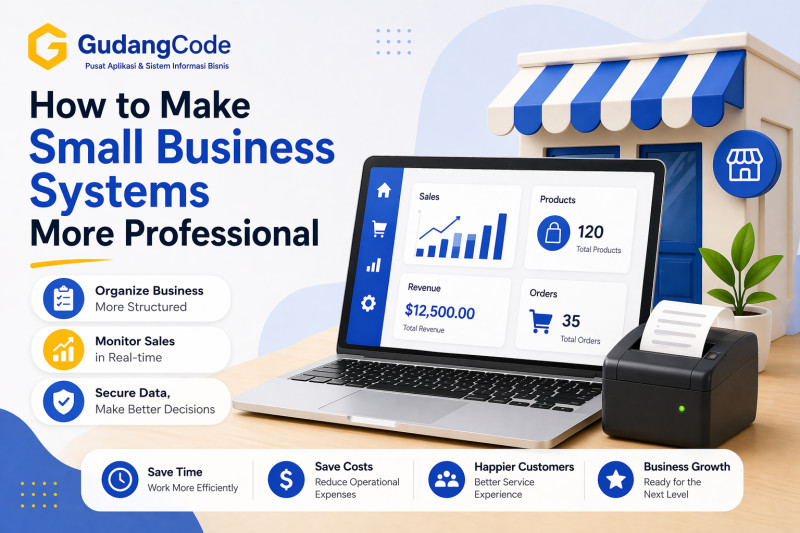
By switching to digital tools step by step, you can run your business more efficiently, accurately, and professionally.